
Evidencia científica del mayor nivel sobre el riesgo de ictus hemorrágico en las personas con trastornos psiquiátricos podría informar intervenciones clínicas más efectivas, así como estudios futuros. Esta revisión tiene como objetivo identificar todos los estudios que comparan el riesgo de ictus hemorrágico en pacientes con y sin depresión, ansiedad, esquizofrenia, trastorno bipolar o trastornos de la personalidad, y proporcionar una estimación del riesgo, siempre que fuera posible, mediante metaanálisis.
MétodosSe realizaron búsquedas electrónicas en Embase, PsycINFO, PubMed, Scopus y Web of Science, desde el inicio de la base hasta el 11 de marzo de 2025. Se utilizó un modelo de efectos aleatorios para estimar el riesgo con intervalos de confianza (IC) del 95%.
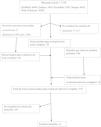
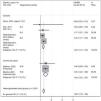
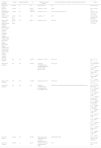
ResultadosSe identificaron inicialmente 17.214 referencias. Finalmente, se incluyeron en la revisión 11 artículos. Siete de ellos (5 estudios observacionales y 2 de aleatorización mendeliana) investigaban la depresión. En el metaanálisis, la depresión mostró una asociación significativa con un riesgo incrementado de ictus hemorrágico, con un cociente de riesgo (CR): 1,28 (1,19-1,38) al incluir solo estudios observacionales, y CR: 1,26 (1,08-1,44) al añadir los estudios de aleatorización mendeliana. Uno de los 3 estudios de pacientes ansiosos, y uno de los 3 de esquizofrénicos, presentaron un riesgo aumentado de ictus hemorrágico. Dos estudios informaron que los pacientes con trastorno bipolar o trastorno de la personalidad no tienen un riesgo aumentado de ictus hemorrágico.
ConclusiónLos pacientes con depresión presentan un mayor riesgo de ictus hemorrágico. La asociación de las enfermedades mentales con el ictus hemorrágico requiere más investigación.
Strong evidence on the risk of haemorrhagic strokes for those with psychiatric conditions may lead to more effective interventions for mental health patients and inform future studies. This systematic review aimed to identify all the studies that compare the risk of haemorrhagic stroke for patients with and without depression, anxiety, schizophrenia, bipolar or personality disorders. It also aimed to provide a summary estimate of the risk, where possible, using meta-analysis.
MethodsElectronic searches were conducted in Embase, PsycINFO, PubMED, Scopus and the Web of Science, from database inception to the 11th of March 2025. A Random-effects model to estimate the pooled effect size with 95% confidence intervals was used.
ResultsSeventeen thousand, two hundred fourteen references were initially identified. Eleven articles were included. Seven of them, five observational and two mendelian randomisation studies, investigated depression. In the meta-analysis depression showed a significant association with an increased risk of haemorrhagic stroke, with pooled HR: 1.28 (1.19-1.38) when only observational studies were included. When mendelian randomisation studies were added the result was a pooled HR: 1.26 (1.08-1.44). The risk of haemorrhagic stroke was increased in one of the three studies that investigated patients with anxiety disorders and in one of the three that looked at patients with schizophrenia. Two studies of bipolar disorder, and one of personality disorders, reported that patients with these conditions do not have an increased risk of haemorrhagic stroke.
ConclusionPatients with depression have an increased risk of haemorrhagic stroke. The association of mental illness with haemorrhagic stroke needs further research.
Article

If it is the first time you have accessed you can obtain your credentials by contacting Elsevier Spain in suscripciones@elsevier.com or by calling our Customer Service at902 88 87 40 if you are calling from Spain or at +34 932 418 800 (from 9 to 18h., GMT + 1) if you are calling outside of Spain.
If you already have your login data, please click here .
If you have forgotten your password you can you can recover it by clicking here and selecting the option ¿I have forgotten my password¿.