


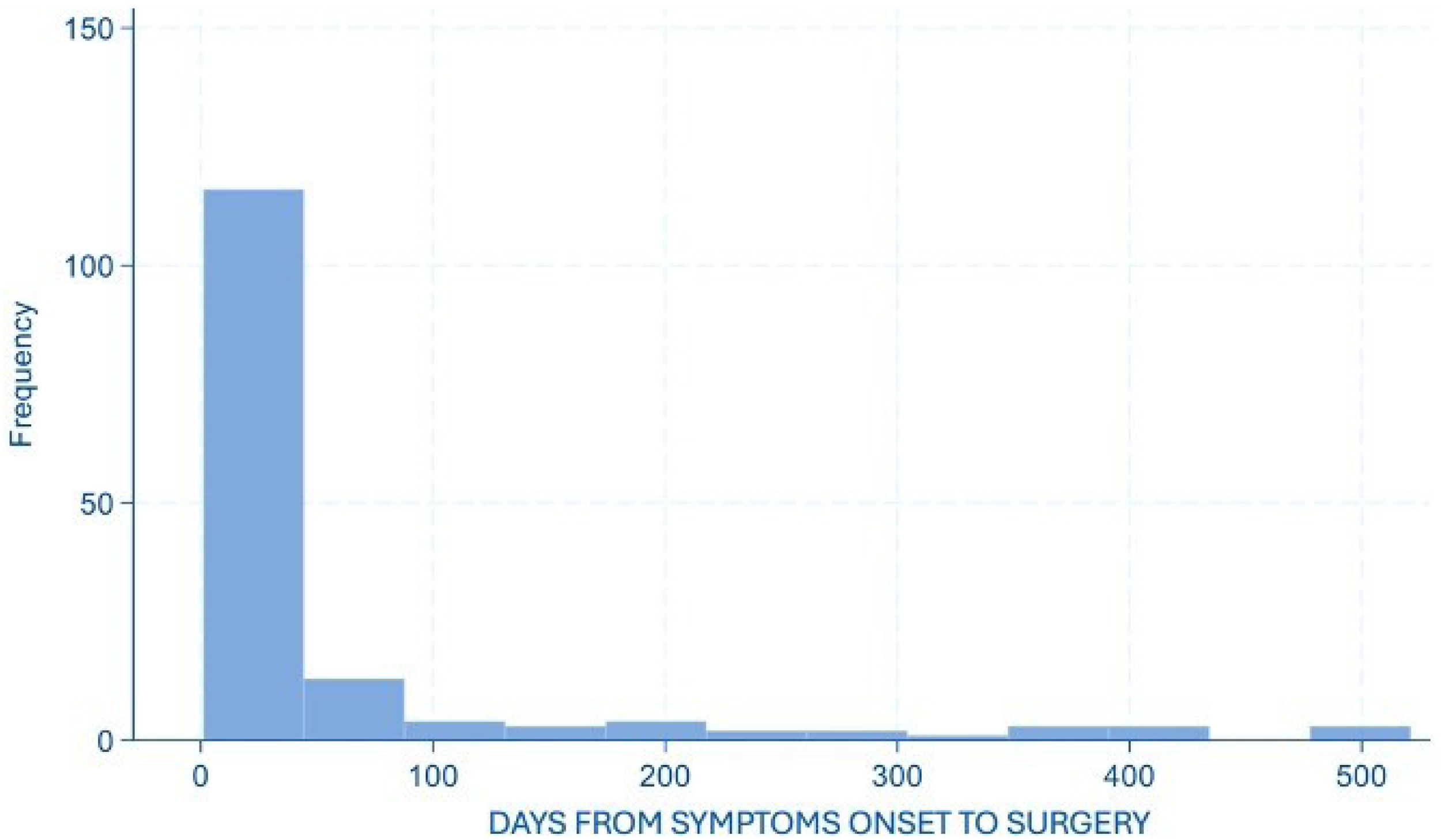
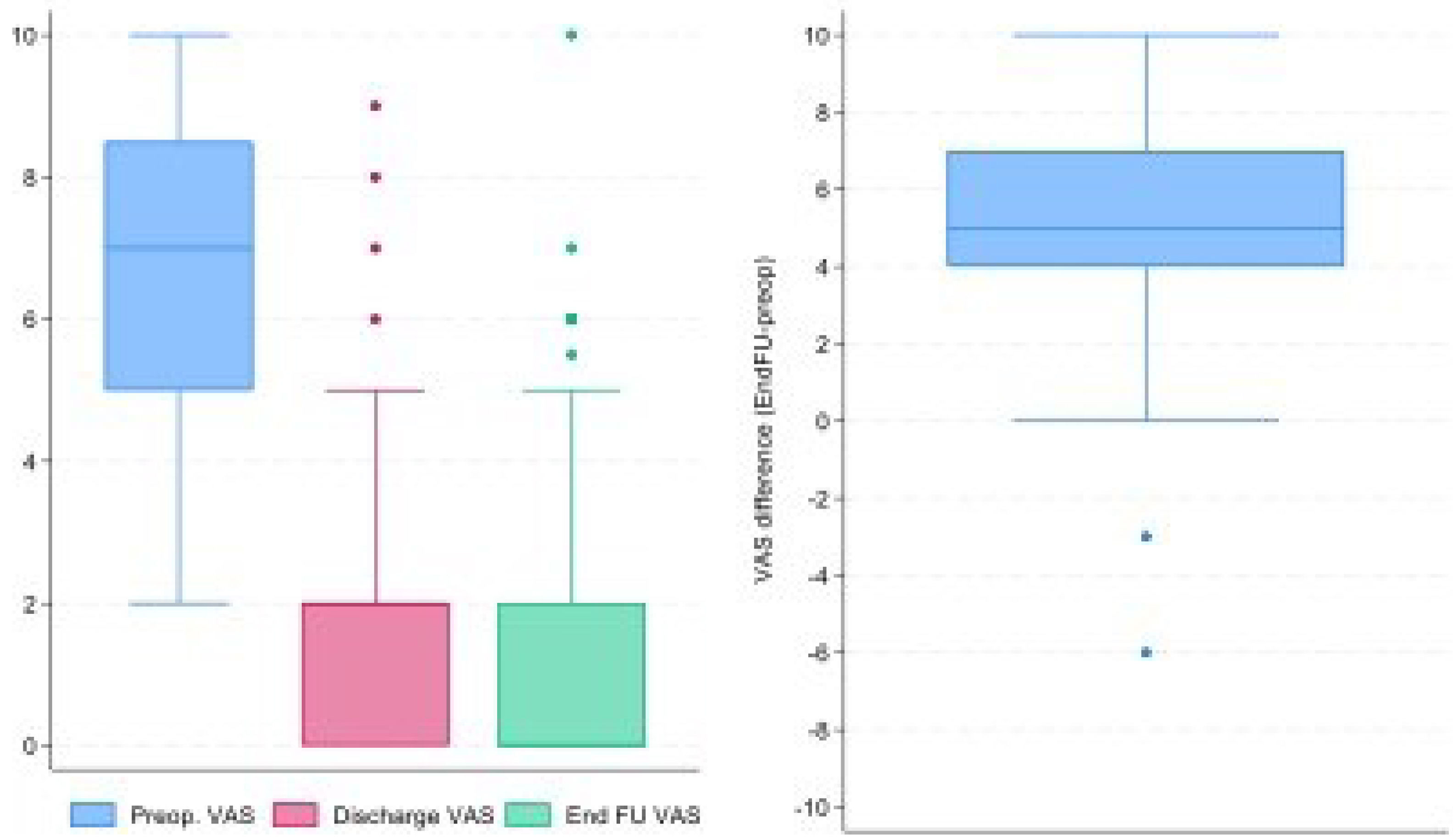
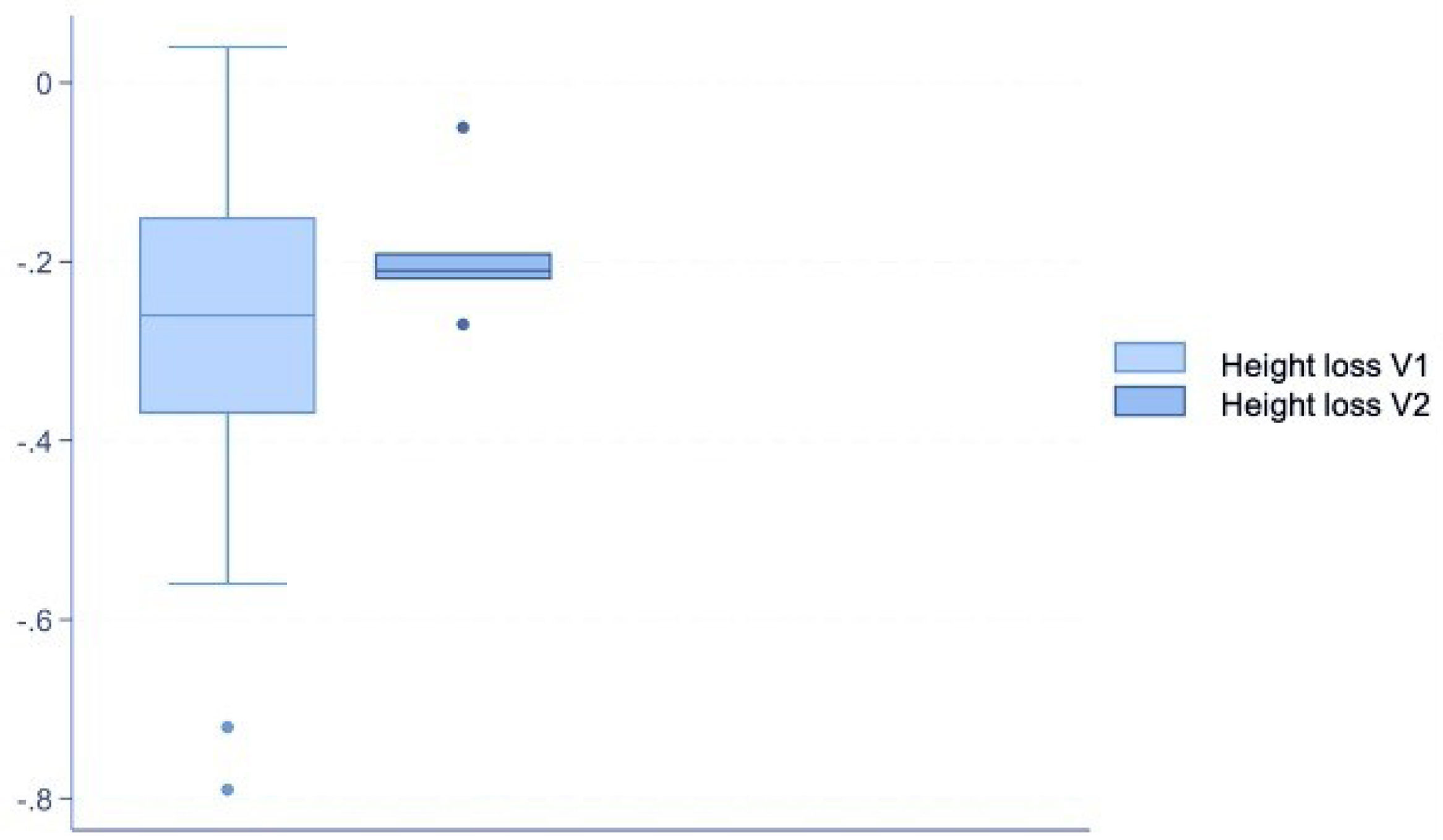
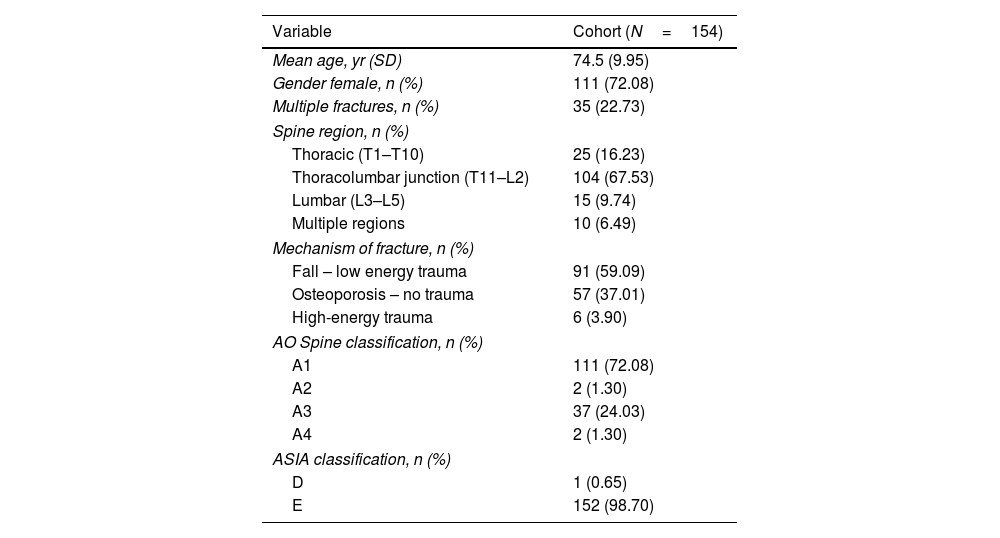
There is no consensus regarding the best timing of vertebral augmentation (VA) procedures for the treatment of osteoporotic thoracolumbar fractures. This study aims to determine if early VA (performed during the first 2 weeks of evolution) show an advantage over delayed surgery in terms of efficacy and safety outcomes, and to evaluate the role of different modifiable therapeutic variables on the same outcomes.
Material and methodsSingle-center retrospective study including all patients aged >50 years who underwent VA for thoracolumbar osteoporotic fracture from 2010 to 2023. Patients with two events in less than 3 months or incomplete follow-up were excluded. Pain relief, fracture progression and cement extravasation were assessed with regression analyses.
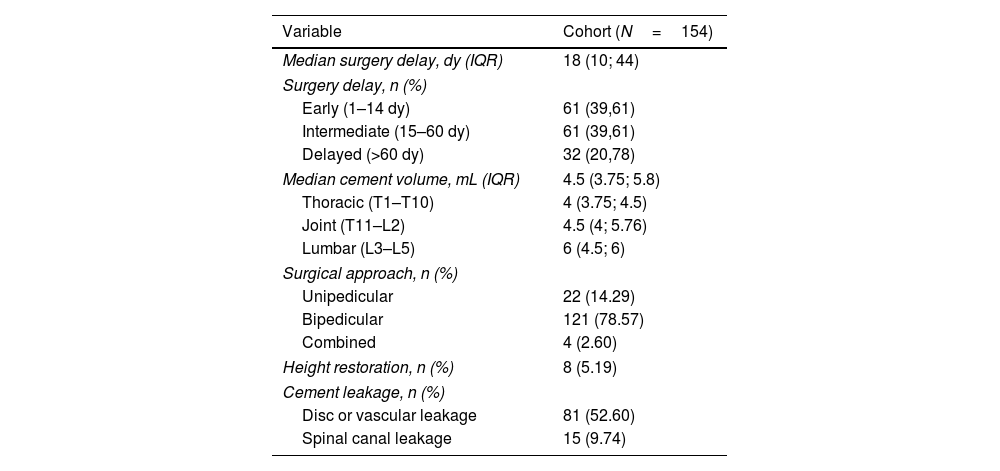
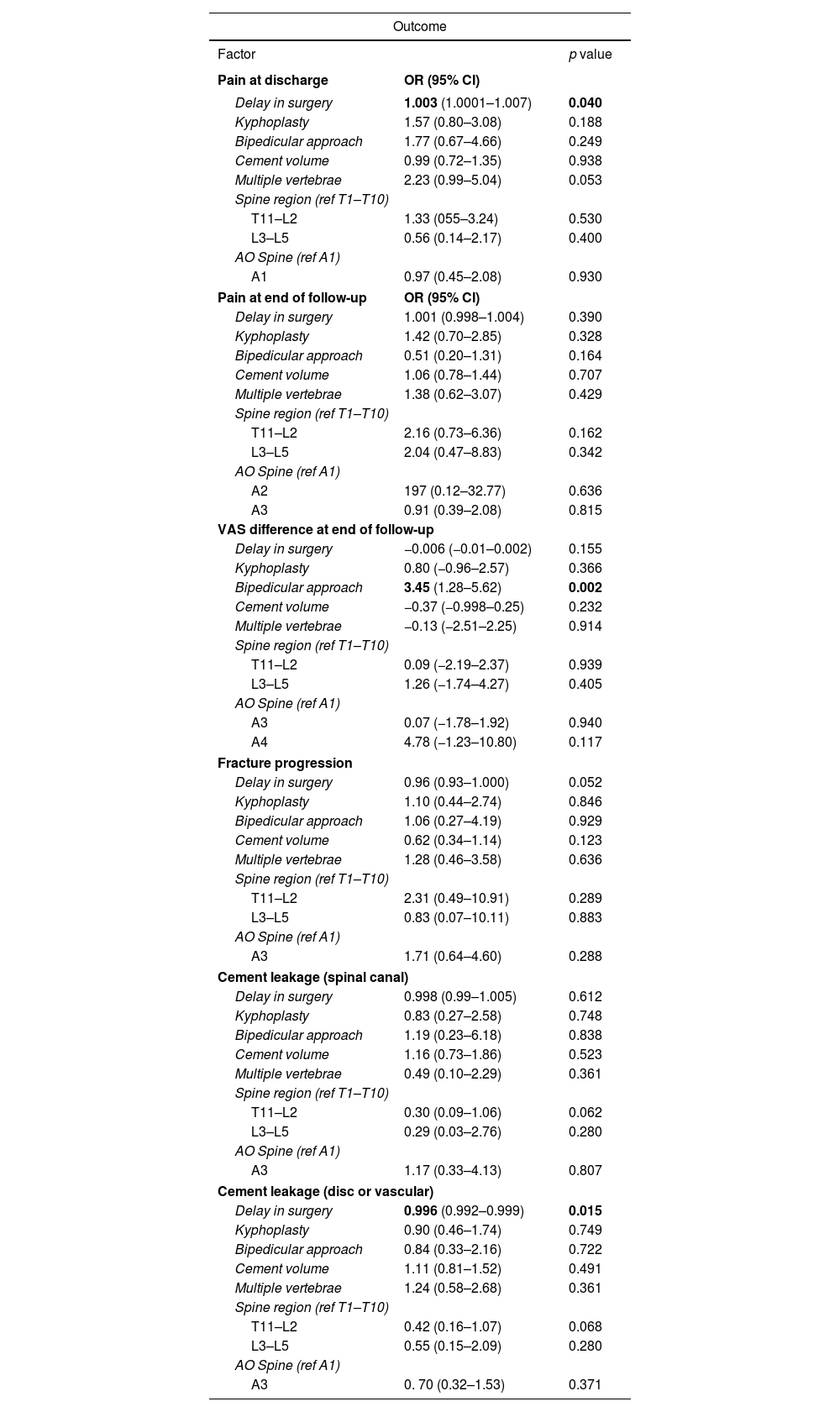
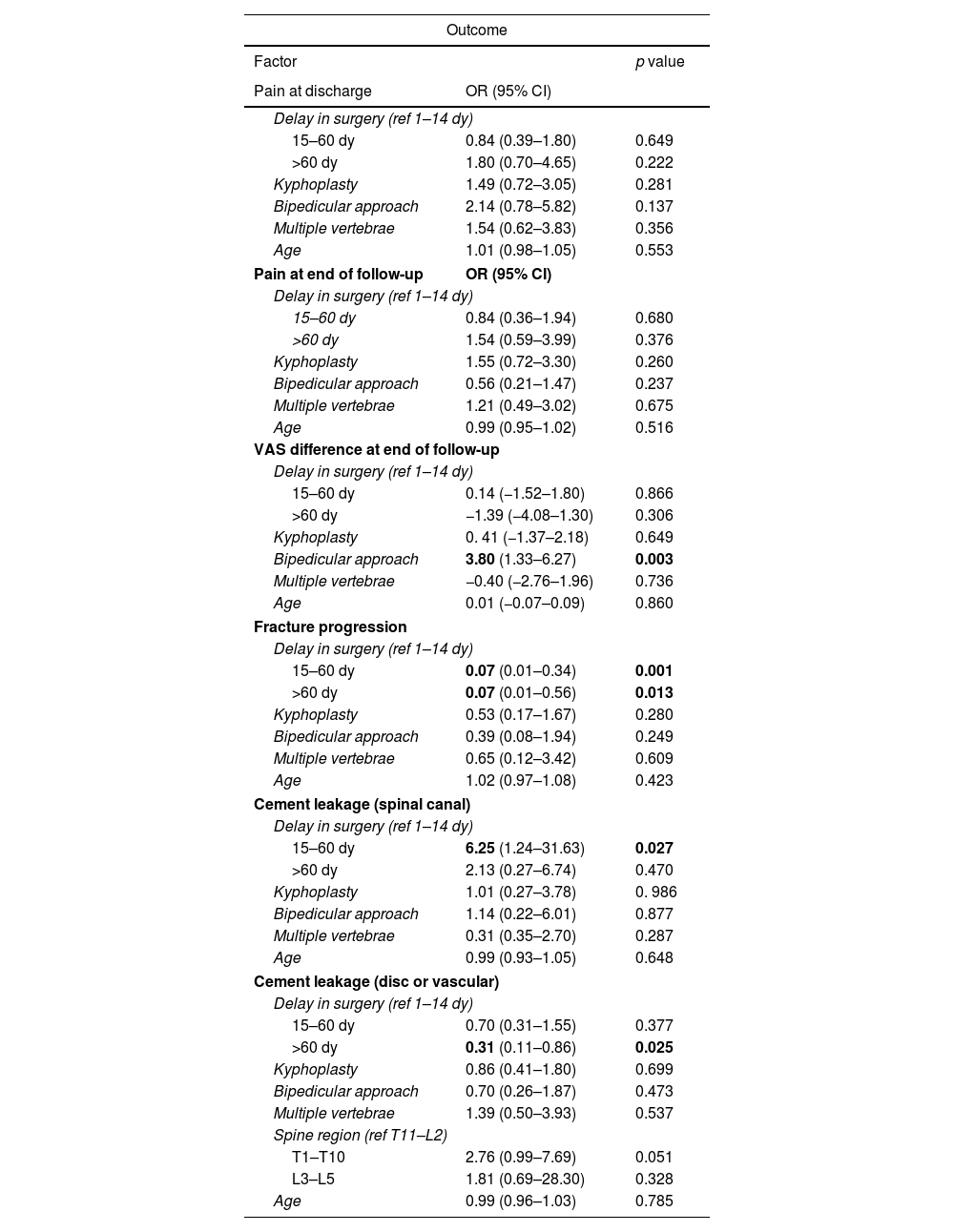
ResultsOne hundred fifty-four procedures were analyzed, with no significant difference in pain relief according to the timing of surgery. Early VA (1–14 days after symptoms onset) was associated with higher risk of fracture progression compared to intermediate (15–60 days; OR 15.2, p=0.001) and delayed (>60 days; OR 16.2, p=0.013) procedures; higher risk of cement leakage into the disc or vascular space (OR 3.2, p=0.025); but lower risk of spinal canal cement leakage (OR 0.16, p=0.027). No differences were observed between vertebroplasty and kyphoplasty.
DiscussionEarly VA showed equivalent but earlier effect on pain relief and reduced risk of spinal canal leakage when compared with delayed procedures, despite a non-clinically significant increased risk of fracture progression and cement leakage into the disc or drainage vessels. Thus, it was identified as the most effective strategy for balancing analgesic efficacy and procedural safety.
No existe consenso sobre cuál es el momento óptimo para realizar procedimientos de cementación vertebral (CV) en el tratamiento de las fracturas toracolumbares osteoporóticas. El objetivo de este estudio es determinar si la cementación precoz (realizada durante las dos primeras semanas de evolución) presenta ventajas con respecto a la cirugía diferida en términos de eficacia y seguridad, así como evaluar el papel de las diferentes variables terapéuticas modificables en dichos resultados.
Materiales y métodosEstudio retrospectivo unicéntrico que incluyó a todos los pacientes mayores de 50 años que se sometieron a una CV por fractura osteoporótica toracolumbar entre 2010 y 2023. Se excluyó a los pacientes con dos episodios en menos de tres meses o con un seguimiento incompleto. Mediante un análisis de regresión se evaluaron el alivio del dolor, la progresión de la fractura y la extravasación de cemento.
ResultadosSe analizaron 154 procedimientos, sin diferencias significativas en el alivio del dolor según el momento de la cirugía. La CV precoz (uno a 14 días después del inicio de los síntomas) se asoció a un mayor riesgo de progresión de la fractura en comparación con la cementación intermedia (15-60 días; OR 15,2, p=0,001) y la tardía (>60 días; OR 16,2, p=0,013); mayor riesgo de fuga de cemento al disco o a vasos adyacentes (OR 3,2, p=0,025); pero menor riesgo de fuga de cemento al canal espinal (OR 0,16, p=0,027). No se observaron diferencias entre vertebroplastia y cifoplastia.
DiscusiónLa CV precoz mostró un efecto equivalente pero más temprano en el alivio del dolor y redujo el riesgo de fuga de cemento al canal espinal en comparación con intervenciones diferidas, a pesar de un aumento del riesgo de progresión de la fractura y fuga de cemento al disco o a los vasos de drenaje (efectos sin repercusión clínica significativa). Así, se identificó como la estrategia más eficaz para equilibrar la eficacia analgésica y la seguridad del procedimiento.
Article

If it is the first time you have accessed you can obtain your credentials by contacting Elsevier Spain in suscripciones@elsevier.com or by calling our Customer Service at902 88 87 40 if you are calling from Spain or at +34 932 418 800 (from 9 to 18h., GMT + 1) if you are calling outside of Spain.
If you already have your login data, please click here .
If you have forgotten your password you can you can recover it by clicking here and selecting the option ¿I have forgotten my password¿.