

Since gliomas have no cure, the quality of life (QoL) reported by patients assumes utmost importance in the therapeutic strategy. However, few studies have provided longitudinal data about how surgical resection impacts QoL as reported by patients, and even fewer have included preoperative assessments. The aim of this pilot study was to assess how glioma patients’ QoL changes in the early postoperative period of glioma resection, at 1 month and 6 months, compared to preoperative.
MethodsPatients undergoing surgical resection of low-grade glioma (LGG) or high-grade glioma (HGG) were prospectively included from January 2022 to December 2022. To analyze patient-reported QoL we used EORTC QLQ-C30 and BN20 questionnaires applied preoperatively and at 1 and 6 months after surgery.
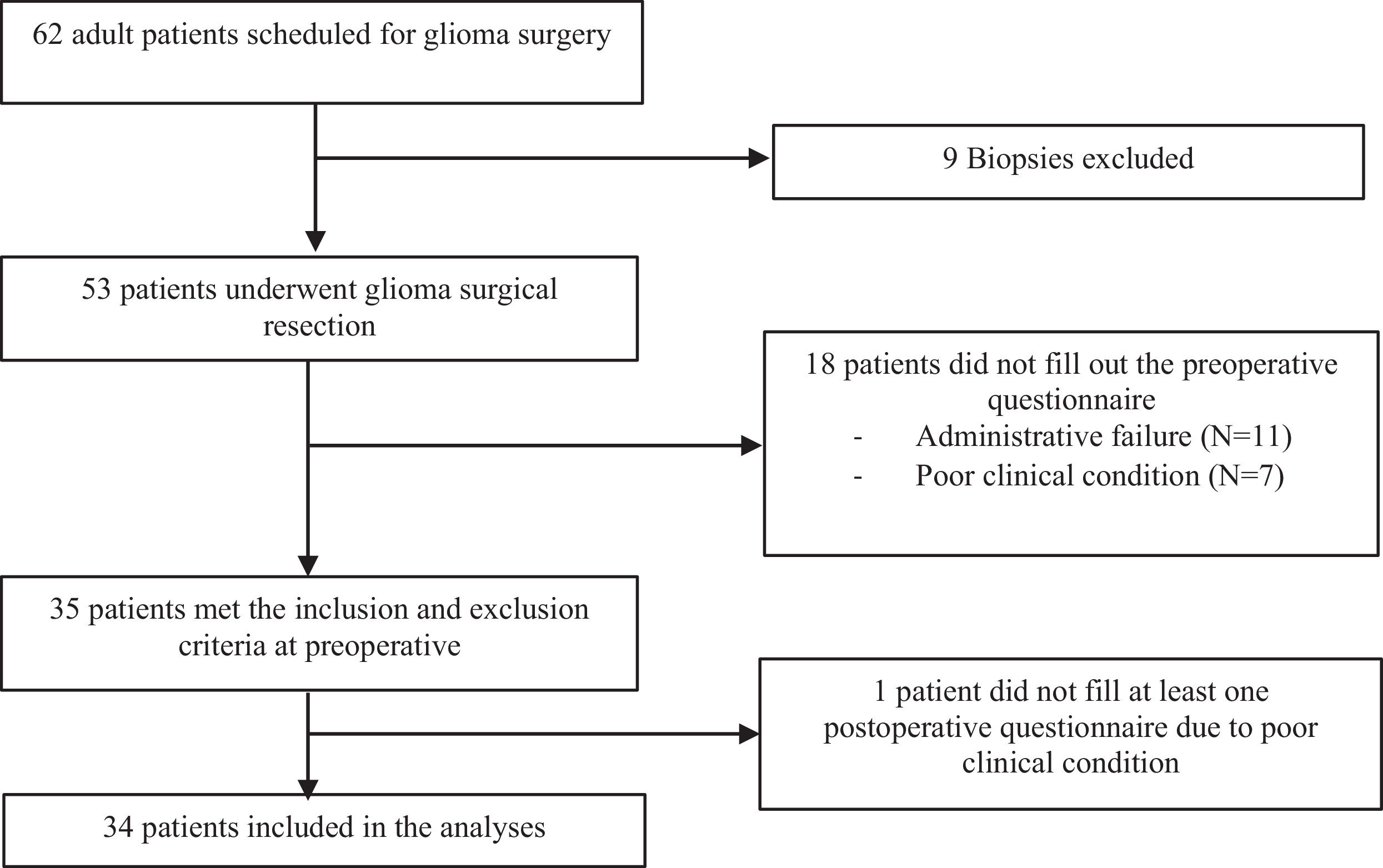
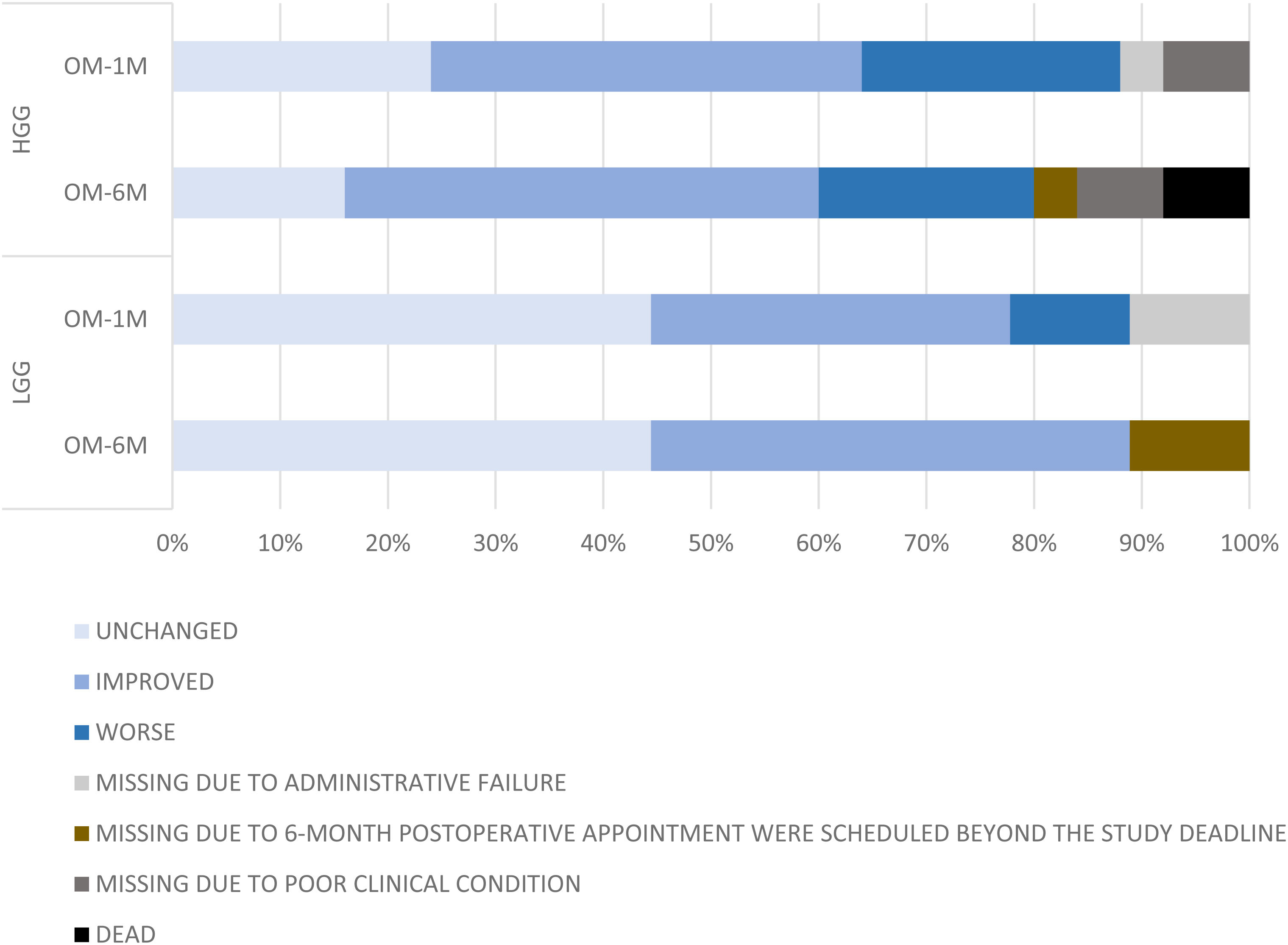
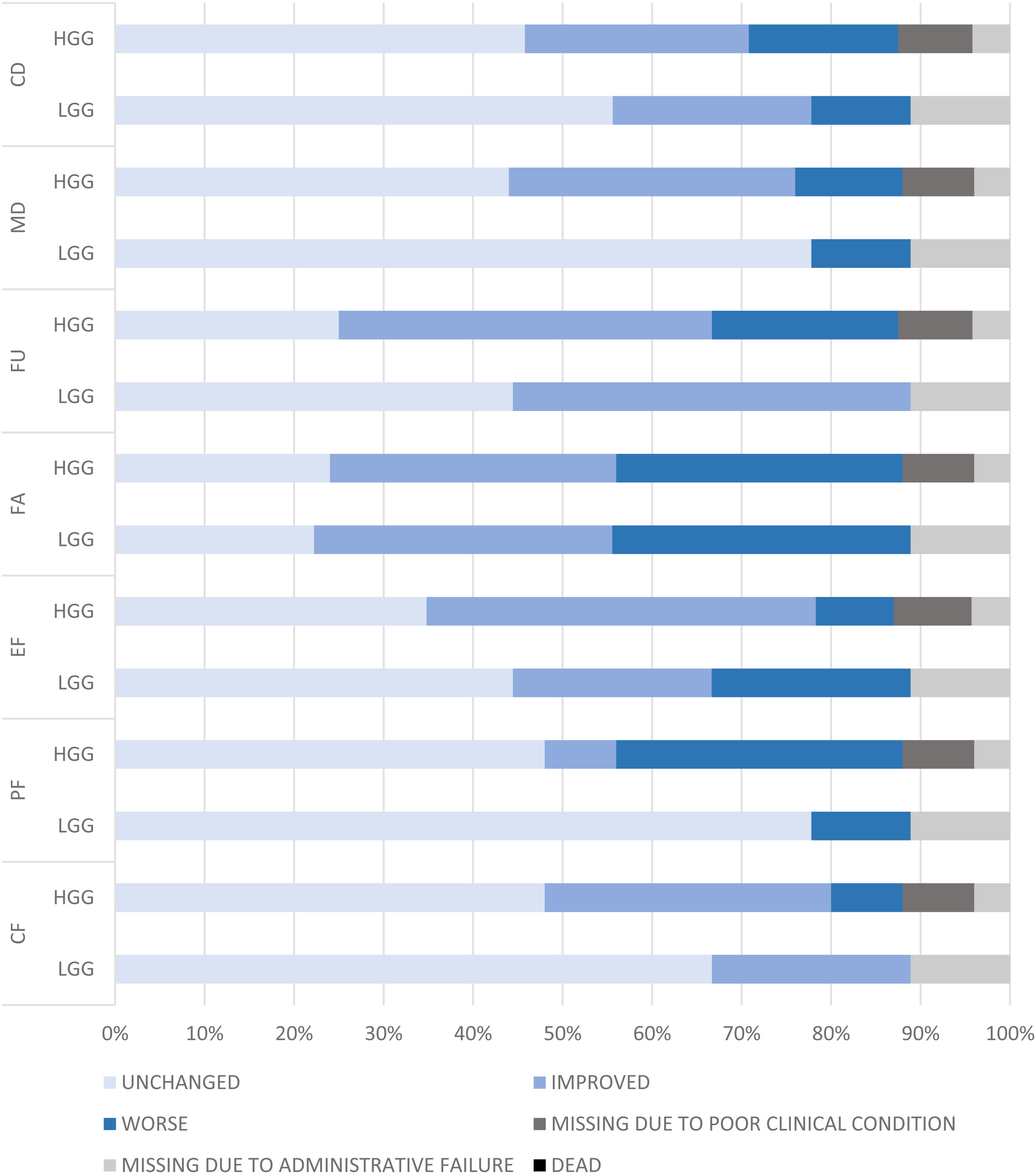
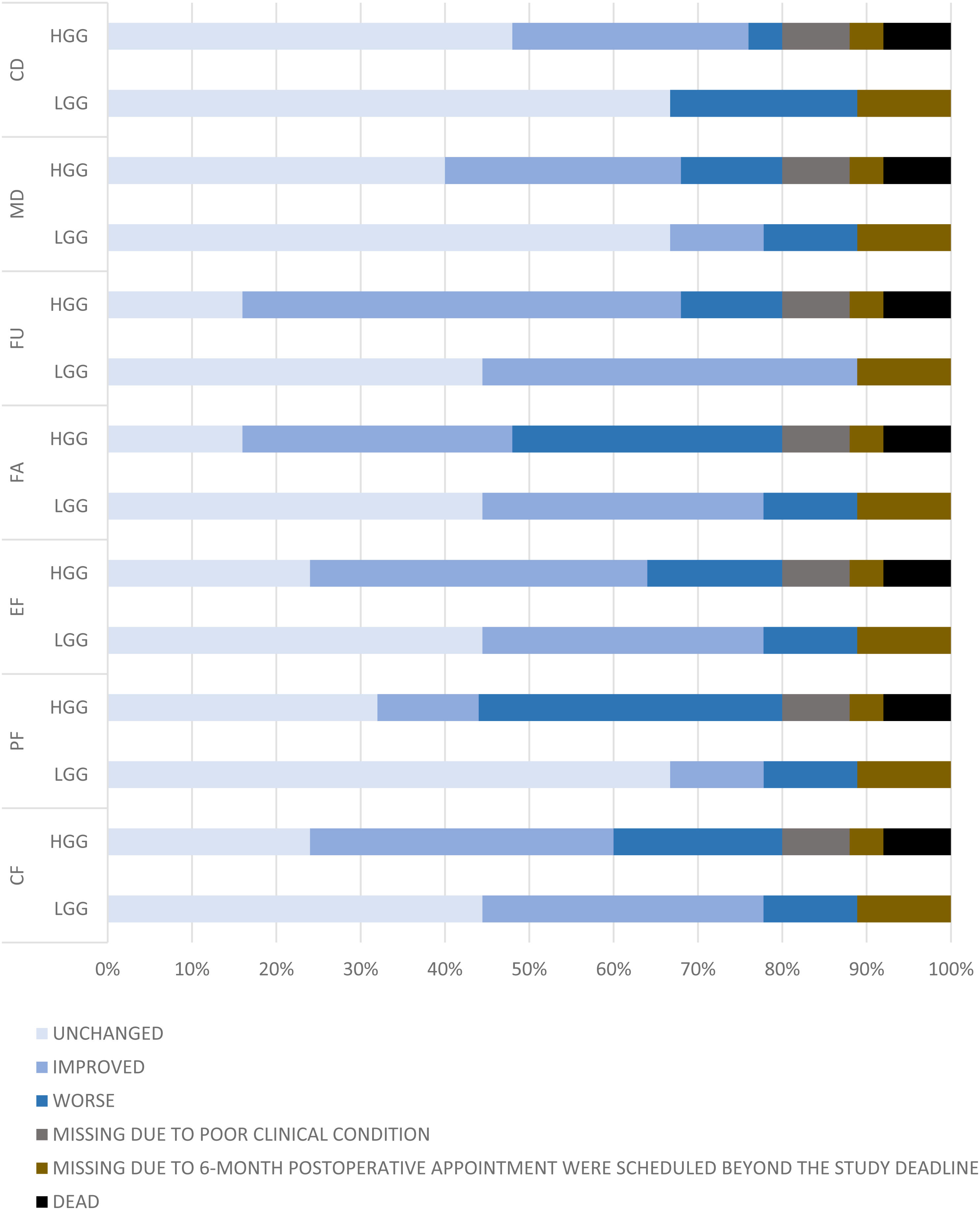
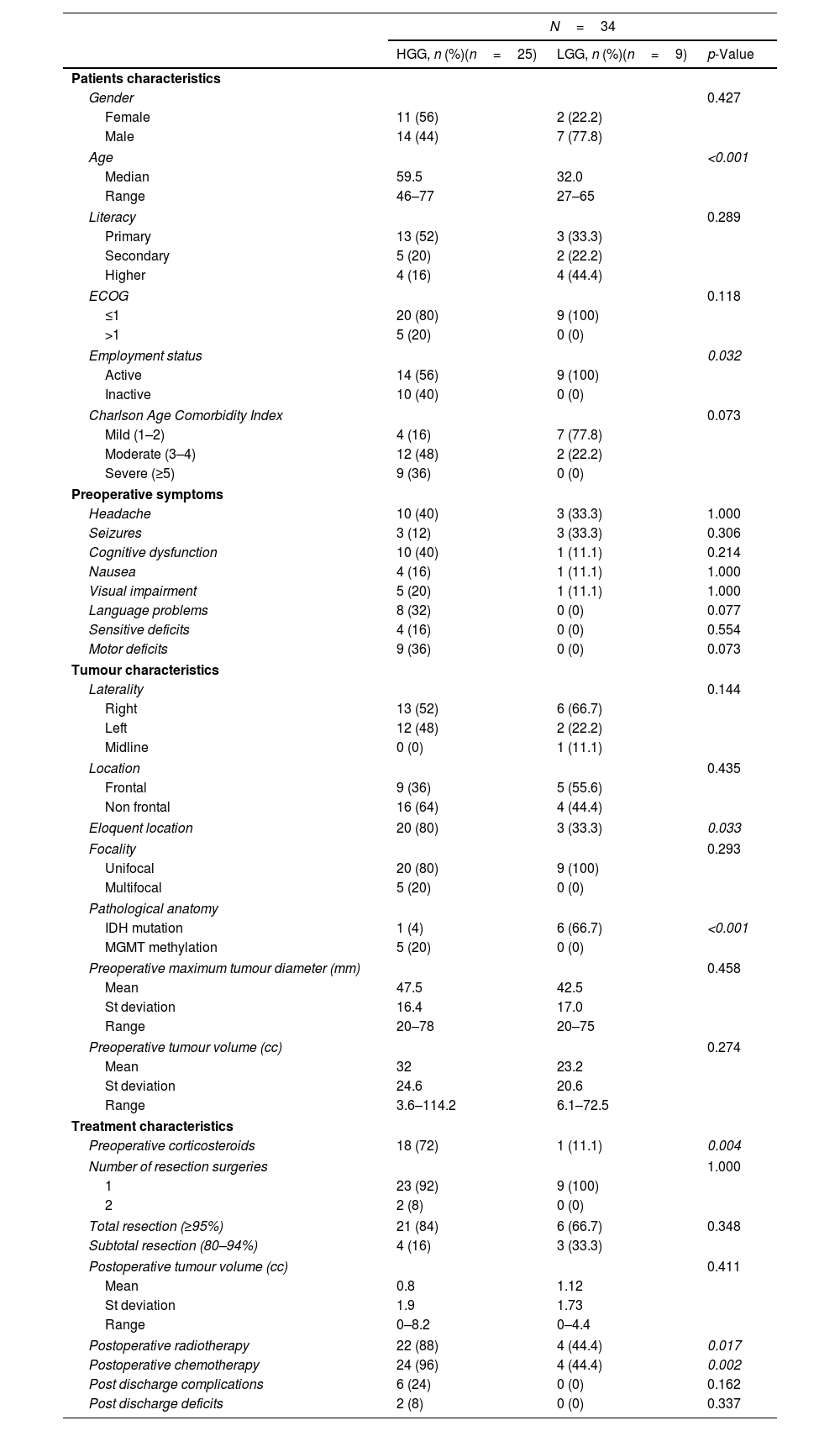
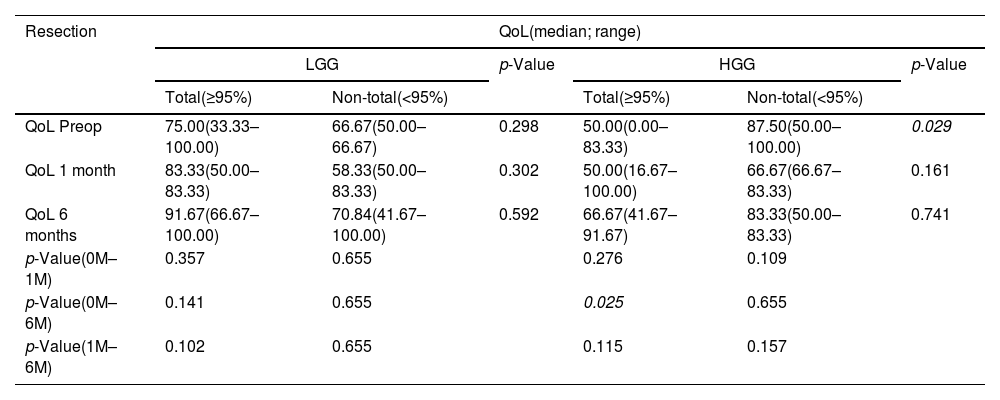
ResultsWe evaluated 34 patients (LGG-9; HGG-25). There were no differences in QoL at all evaluation time points between LGG and HGG groups. Within the LGG patients, QoL scores remained stable throughout 1- and 6-month evaluations. In patients with HGG, when compared to baseline, there were no meaningful variations in QoL at 1 month, but a clinically and statistically significant improvement (p=0.035) was found at 6 months. Total resection was associated with improved QoL in HGG patients at 6 months (p=0.025). At individual level, considering a minimum clinically significant value of 10, most HGG patients improved their QoL, while most LGG patients remained stable. Regarding subdomain analysis, a clinically and statistically significant improvement in future uncertainty was found in both LGG (p=0.042) and HGG (p=0.024) patients at 6 months.
ConclusionsContrarily to previous studies that revealed a deterioration in HGG patients at 6 months, our preliminary data suggest an improvement in the QoL of these patients at 6 months. Additionally, total resection seems to be beneficial, as it was not associated with QoL deterioration, and can even improve QoL.
Dado que los gliomas no tienen cura, la calidad de vida (CdV) informada por los pacientes adquiere una importancia fundamental en la estrategia terapéutica. Sin embargo, pocos estudios han proporcionado datos longitudinales sobre cómo la resección quirúrgica impacta la CdV informada por los pacientes, y aún menos han incluido evaluaciones preoperatorias. El objetivo de este estudio piloto fue evaluar cómo cambia la CdV de los pacientes con glioma en el período postoperatorio temprano tras la resección, a uno y 6 meses, en comparación con el estado preoperatorio.
MétodosSe incluyeron prospectivamente pacientes sometidos a resección quirúrgica de glioma de bajo grado (GBG) o de alto grado (GAG) desde enero de 2022 hasta diciembre de 2022. Para analizar la CdV informada por los pacientes, se utilizaron los cuestionarios EORTC QLQ-C30 y BN20, aplicados en el preoperatorio al mes y a los 6 meses de la cirugía.
ResultadosSe evaluaron 34 pacientes (GBG-9; GAG-25). No se encontraron diferencias en la CdV en todos los puntos de evaluación entre los grupos de GBG y GAG. En los pacientes con GBG, las puntuaciones de CdV se mantuvieron estables durante las evaluaciones al mes y a los 6 meses. En los pacientes con GAG, en comparación con la evaluación basal, no hubo variaciones significativas en la CdV al mes, pero se encontró una mejoría clínica y estadísticamente significativa (p=0,035) a los 6 meses. La resección total se asoció con una mejoría de la CdV en los pacientes con GAG a los 6 meses (p=0,025). A nivel individual, considerando un valor mínimo clínicamente significativo de 10, la mayoría de los pacientes con GAG mejoraron su CdV, mientras que la mayoría de los pacientes con GBG se mantuvieron estables. En cuanto al análisis de subdominios, se encontró una mejoría clínica y estadísticamente significativa en la incertidumbre sobre el futuro tanto en los pacientes con GBG (p=0,042) como con GAG (p=0,024) a los 6 meses.
ConclusionesContrariamente a estudios previos que revelaron un deterioro en los pacientes con GAG a los 6 meses, nuestros datos preliminares sugieren una mejoría en la CdV de estos pacientes a dicho plazo. Además, la resección total parece ser beneficiosa, ya que no se asoció con un deterioro de la CdV, e incluso puede mejorarla.
Article

If it is the first time you have accessed you can obtain your credentials by contacting Elsevier Spain in suscripciones@elsevier.com or by calling our Customer Service at902 88 87 40 if you are calling from Spain or at +34 932 418 800 (from 9 to 18h., GMT + 1) if you are calling outside of Spain.
If you already have your login data, please click here .
If you have forgotten your password you can you can recover it by clicking here and selecting the option ¿I have forgotten my password¿.