

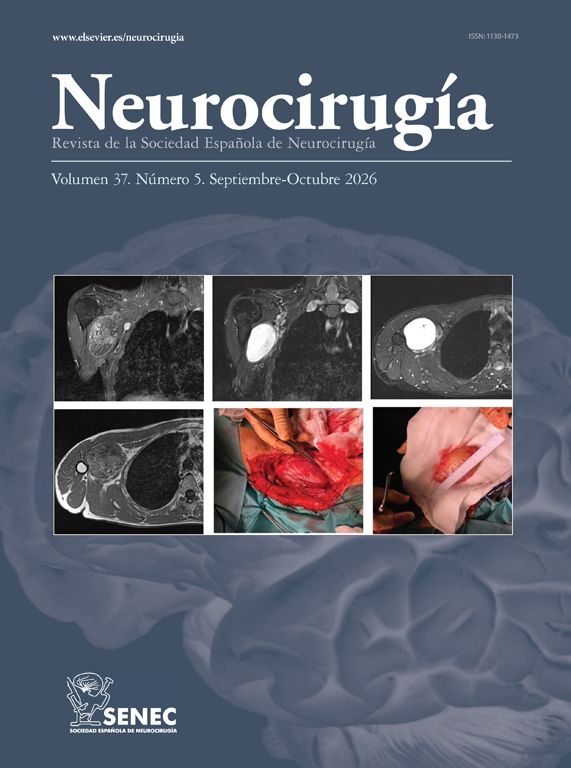
Los tumores del plexo braquial (PB) son infrecuentes, con una prevalencia inferior al 5% de los tumores de la extremidad superior, y su resección quirúrgica supone un importante desafío debido a la complejidad anatómica de la región. El objetivo de este estudio retrospectivo es analizar en una serie grande de pacientes las características clínicas, radiológicas y quirúrgicas de los tumores del PB, así como evaluar los distintos abordajes quirúrgicos empleados en función de la localización y las características tumorales.
Material y métodosSe realizó un estudio retrospectivo de todos los pacientes intervenidos por tumores del PB entre 2000 y 2025 en un centro terciario. Se recogieron variables clínicas, radiológicas, histológicas, quirúrgicas y de evolución. Los abordajes se clasificaron en supraclavicular (SC), infraclavicular (IC), supra / infraclavicular (SC/IC) y posterior (POST). Se definieron déficit neurológico leve y severo. Se empleó estadística descriptiva y la prueba de χ2 para analizar la relación entre tamaño tumoral y malignidad.
ResultadosSe incluyeron 47 pacientes (media: 48,5 años; 55,3% mujeres). El síntoma más frecuente fue el dolor (72,3%). Los tumores fueron: schwannomas 29,8%, neurofibromas 27,7%, malignos 25,5%, metástasis 4,3% y misceláneos 12,8%. La resección completa se logró en el 53,2%, siendo más frecuente en los schwannomas. Las localizaciones más frecuentes fueron el cordón posterior y el tronco inferior. La relación tamaño / malignidad mostró una tendencia no significativa hacia mayor malignidad en tumores >50mm (p=0,072). Tras la cirugía, un 46,8% quedó sin secuelas; siendo el déficit motor postoperatorio más frecuente en los pacientes sin déficit previo. Se registraron recidivas en el 23,4% y progresión de restos en el 14,9%.
ConclusionesLa resección quirúrgica de tumores del PB depende del tipo histológico, del tamaño y de la relación con estructuras neurovasculares. Los schwannomas permitieron más resección completa, a diferencia de neurofibromas y tumores malignos, condicionadas por la infiltración y el tamaño. Destacamos la utilidad de la cirugía para la mejoría funcional, ya muchos pacientes pueden mejorar en este apartado, ayudada por la monitorización neurofisiológica intraoperatoria.
Brachial plexus tumors are uncommon, with a prevalence of less than 5% of upper extremity tumors, and their surgical resection represents a major challenge due to the anatomical complexity of the region. The aim of this retrospective study is to analyze, in a large patient series, the clinical, radiological, and surgical characteristics of brachial plexus tumors, as well as to evaluate the different surgical approaches used according to tumor location and characteristics.
Material and methodsA retrospective study was conducted of all patients operated on for brachial plexus tumors between 2000 and 2025 at a tertiary center. Clinical, radiological, histological, surgical, and follow-up variables were collected. Approaches were classified as supraclavicular, infraclavicular, supra-infraclavicular, and posterior. Mild and severe neurological deficits were defined. Descriptive statistics and χ2 tests were used to analyze the relationship between tumor size and malignancy.
ResultsForty-seven patients were included (mean age: 48.5 years; 55.3% women). The most common symptom was pain (72.3%). The tumors were: schwannomas 29.8%, neurofibromas 27.7%, malignant 25.5%, metastases 4.3%, and miscellaneous 12.8%. Complete resection was achieved in 53.2%, being more frequent in schwannomas. The most frequent locations were the posterior cord and the inferior trunk. The size-malignancy relationship showed a non-significant trend towards higher malignancy in tumors >50mm (P=072). After surgery, 46.8% were left without sequelae; new motor deficit was more common in patients without prior deficits. Recurrences were recorded in 23.4% and progression of residual tumor in 14.9%.
ConclusionsSurgical resection of brachial plexus tumors depends on histological type, size, and their relationship with neurovascular structures. Schwannomas allowed a higher rate of total resection, unlike neurofibromas and malignant tumors, which were limited by infiltration and size. We highlight the usefulness of surgery for functional improvement, as most patients improved in this aspect, aided by intraoperative neurophysiological monitoring.
Artículo

Si es la primera vez que accede a la web puede obtener sus claves de acceso poniéndose en contacto con Elsevier España en suscripciones@elsevier.com o a través de su teléfono de Atención al Cliente 902 88 87 40 si llama desde territorio español o del +34 932 418 800 (de 9 a 18h., GMT + 1) si lo hace desde el extranjero.
Si ya tiene sus datos de acceso, clique aquí.
Si olvidó su clave de acceso puede recuperarla clicando aquí y seleccionando la opción "He olvidado mi contraseña".